
The Sum and Its Parts
On Paperwork by Tom Doig
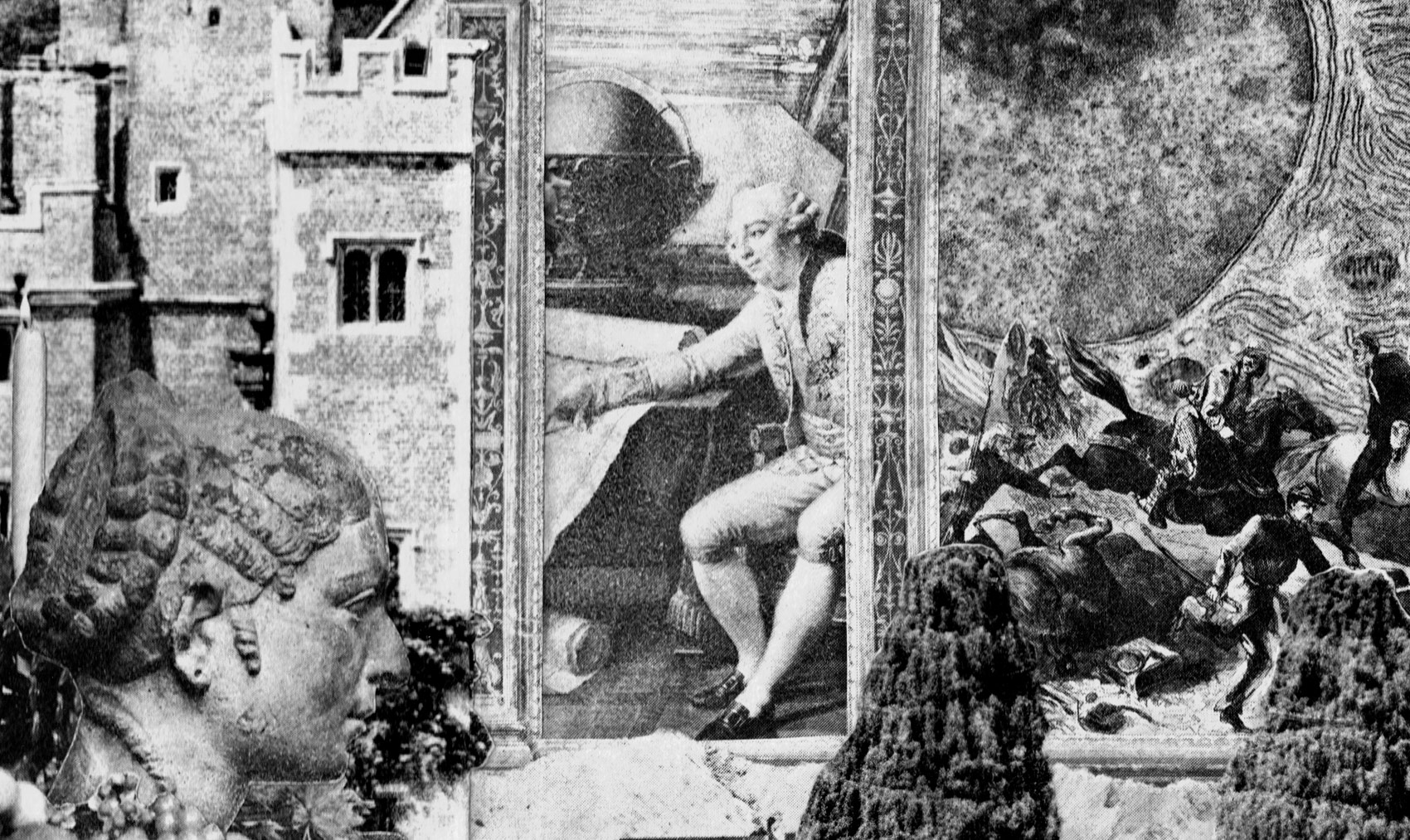
The work of Tom Doig is focused on collage, a medium arguably both arcane and contemporary. In Doig’s hands it is a definitively analogue medium; images selected from old reference books, instructional pamphlets and magazines found in second-hand shops and library sales; cut by hand from those pages and assembled into composite images with glue, or isolated like individual icons, to become suspended in blocks of hand-poured resin.
Conversely the idea of collage; disjointed, dislocated – often unrelated – images, speaks more to our technological moment than perhaps any other medium. Images are generated and consumed at an unprecedented rate often, in the case of an infinite scroll or a discover page, with jarringly incongruous subjects butted up against each other. The flipside of this incongruity is an algorithmic smoothing out, when the machine learns the taste of the user that one gets served up the same type of images over and over again. A slow, intuitive and handmade process acts as a resistance to this imposition of non-logic based on isolated data and instead celebrates a more personal constellation of interests and connections.
Categorisation of images suggests the work of a museum, but Doig’s selection of things doesn’t match with the motivation of those institutions to impose order and a worldview onto things. Instead, his works question and perhaps undermines the impulse of the museum. Much of his source material is drawn from the very things that his work questions; catalogues, encyclopaedias, resource books that act as a function of the “civilising” of the world into neat categories. Doig’s process of combing through resources found by effort or chance stands in contrast to this, although Doig practices a distinct form of taxonomy for his gleaning. In his studio stands a painted filing cabinet, in which source material is filed under headings:
Snakes.
Microscopic.
Cats.
Crowds.
Mushrooms.
Luxury.
Ruins.
Planets.
Isometric.
Retro tech.
Through this interrogation and reordering of images, Doig thinks about historical and contemporary allocation of value and consequently, power. The seemingly proliferation of images mirrors market-driven belief in infinite growth, that no matter how long we go on, there will be more and more to find and extract. Doig’s process again stands in opposition to this, using methods and aesthetics associated with both Dada and DIY zine-making, not in order to make something raw and directly confrontational but rather something delicate, layered, whose critique is no less effective for being beautiful.
In elevating and repurposing formerly obsolete materials, Doig is giving them care and attention that result in new value through transformation. The critique of historical or contemporary hegemony remains but something else appears. The diamonds or gems on the wall represent luxury, scarcity, arbitrary value removed from context, cold and inert. But look closer and a whole world of teeming images is revealed, multifarious, complicated and overlapping.
Benjamin Stafford April 2026