Eilís Kennedy
Bio
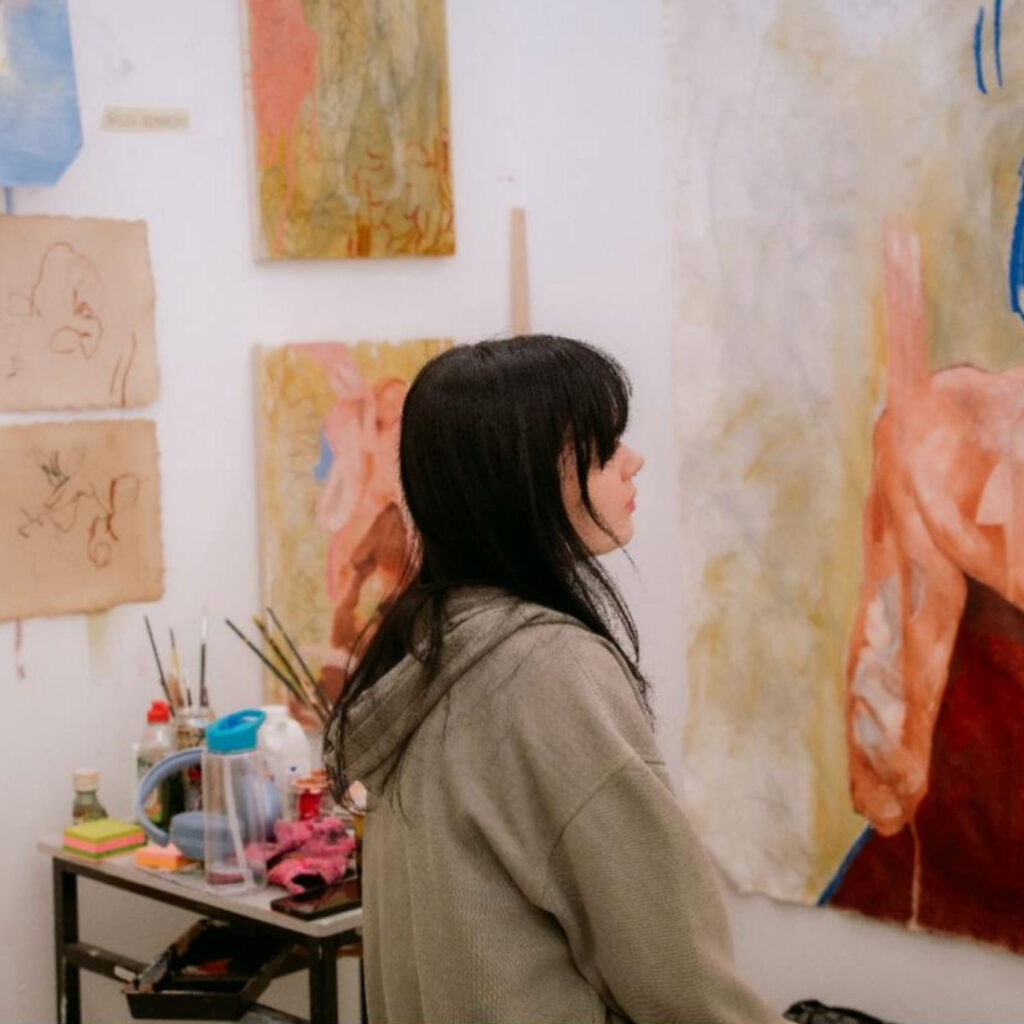
Eilís Kennedy is a Cork based visual artist who specialises in painting and drawing, originally from County Mayo. Kennedy attended Crawford College of Art and Design and graduated with a first-class honours with the highest overall grade in her year in 2026. She was then fortunately recognized through awards such as the Backwater Network Membership Award, Sample Studios Network Membership Award, MTU Purchase Prize, STEAM Exhibition Award and Best Thesis Prize (2026). Her work was also purchased by The Office of Public Works.
Recently, Kennedy’s work has intertwined itself with visualising philosophical and feminist theory, whilst simultaneously leaning into the formalities of contemporary art that allows a public audience to resonate with its more conceptual ideas.
Artist Statement
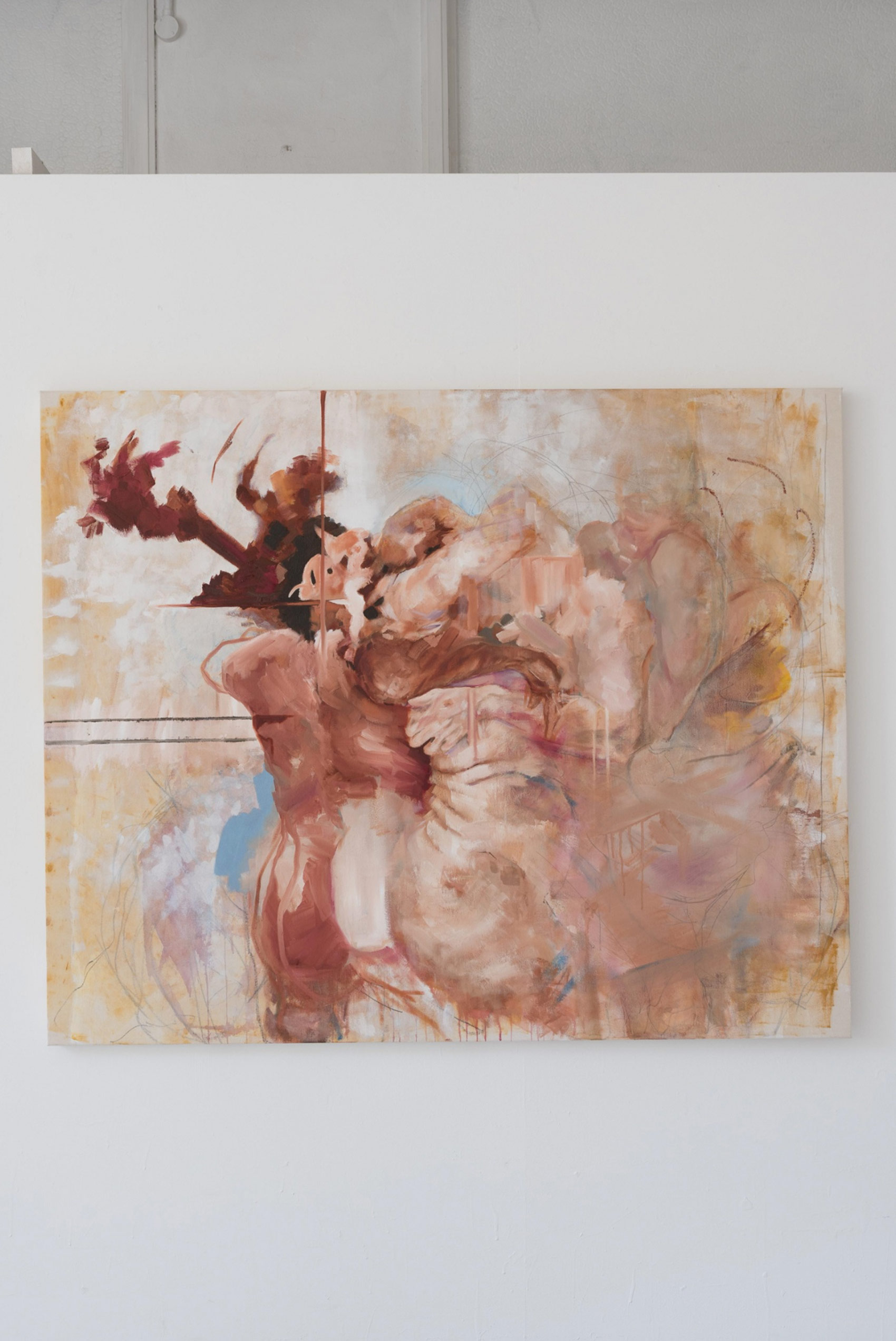
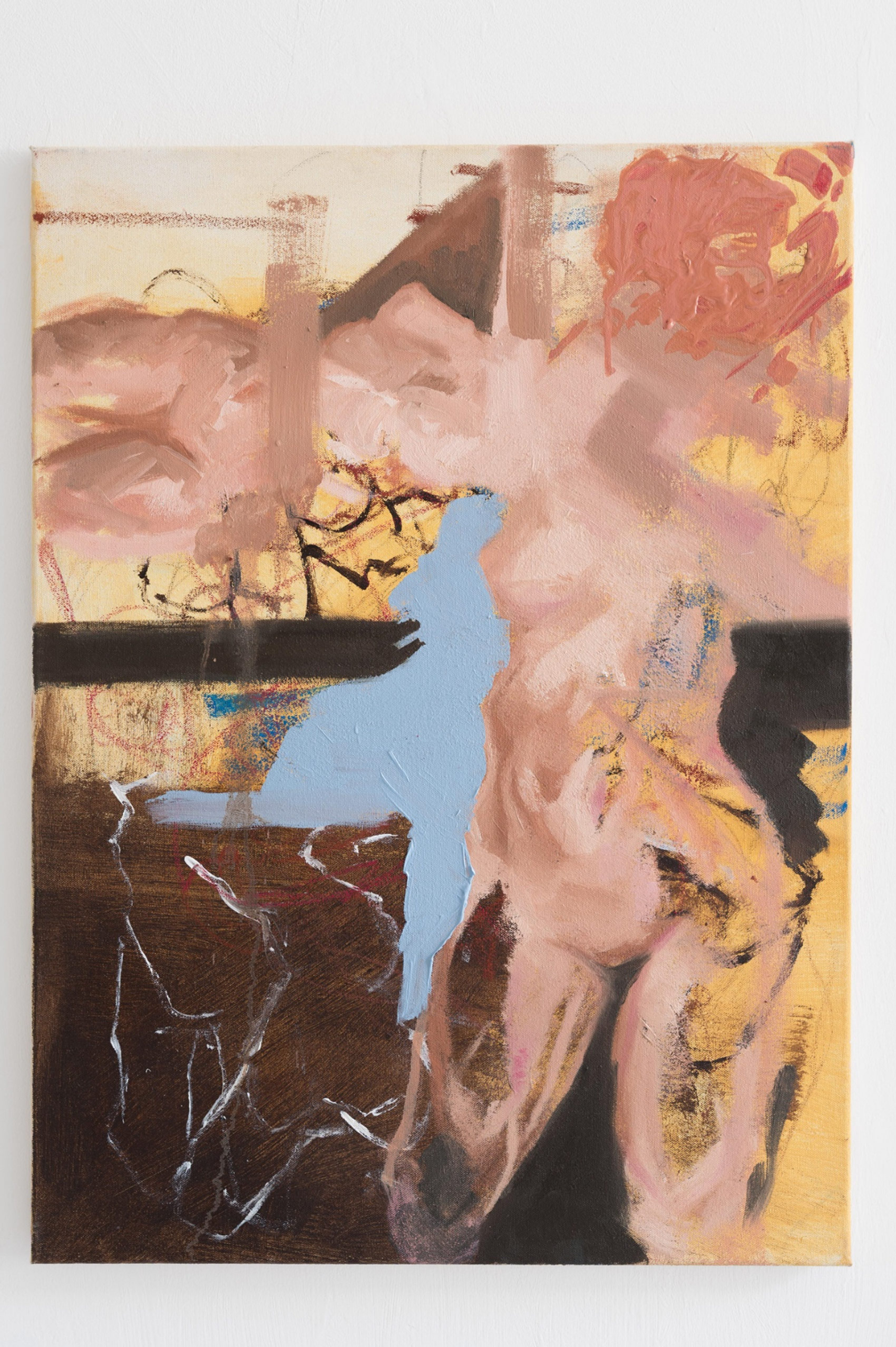
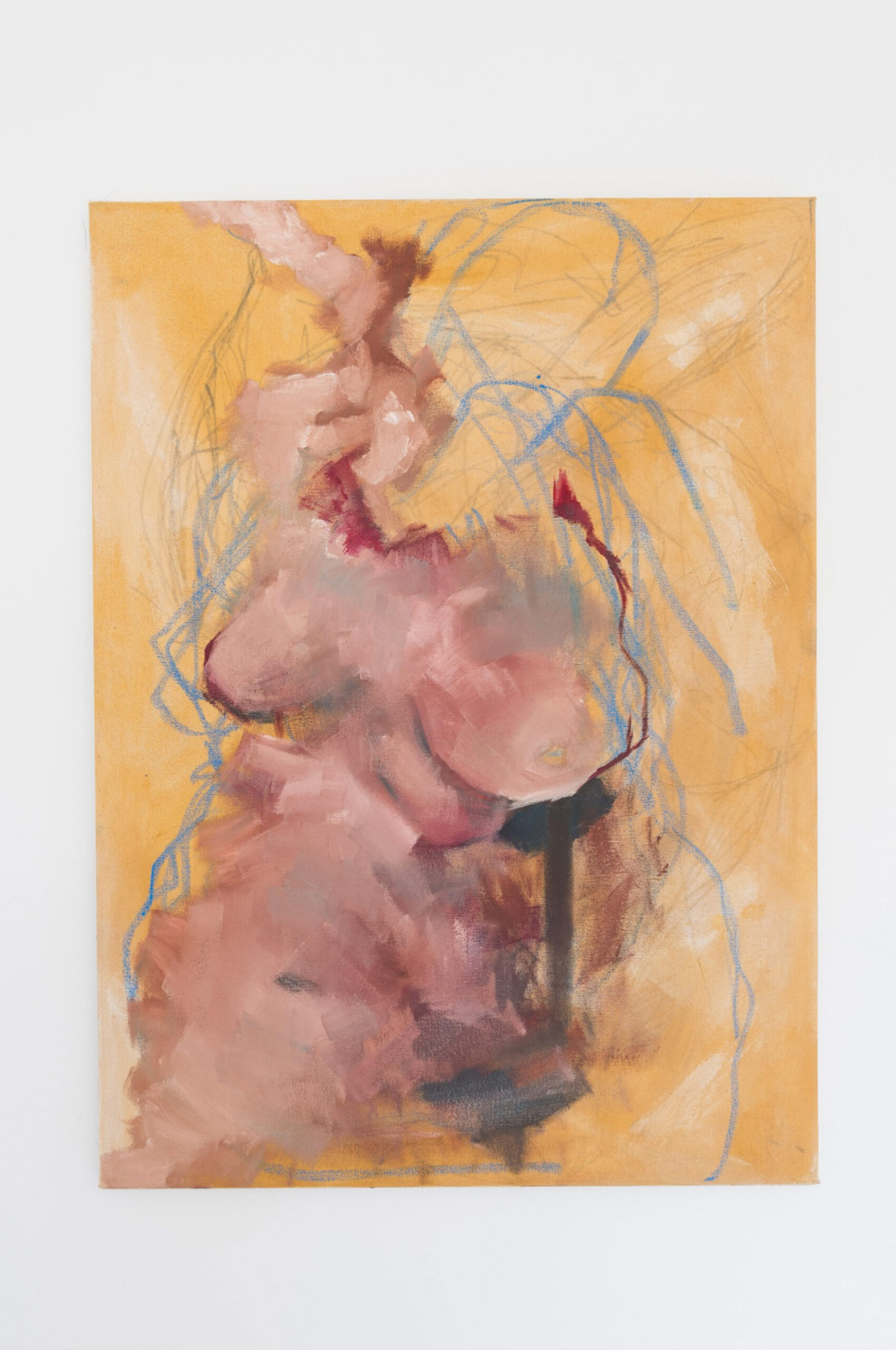
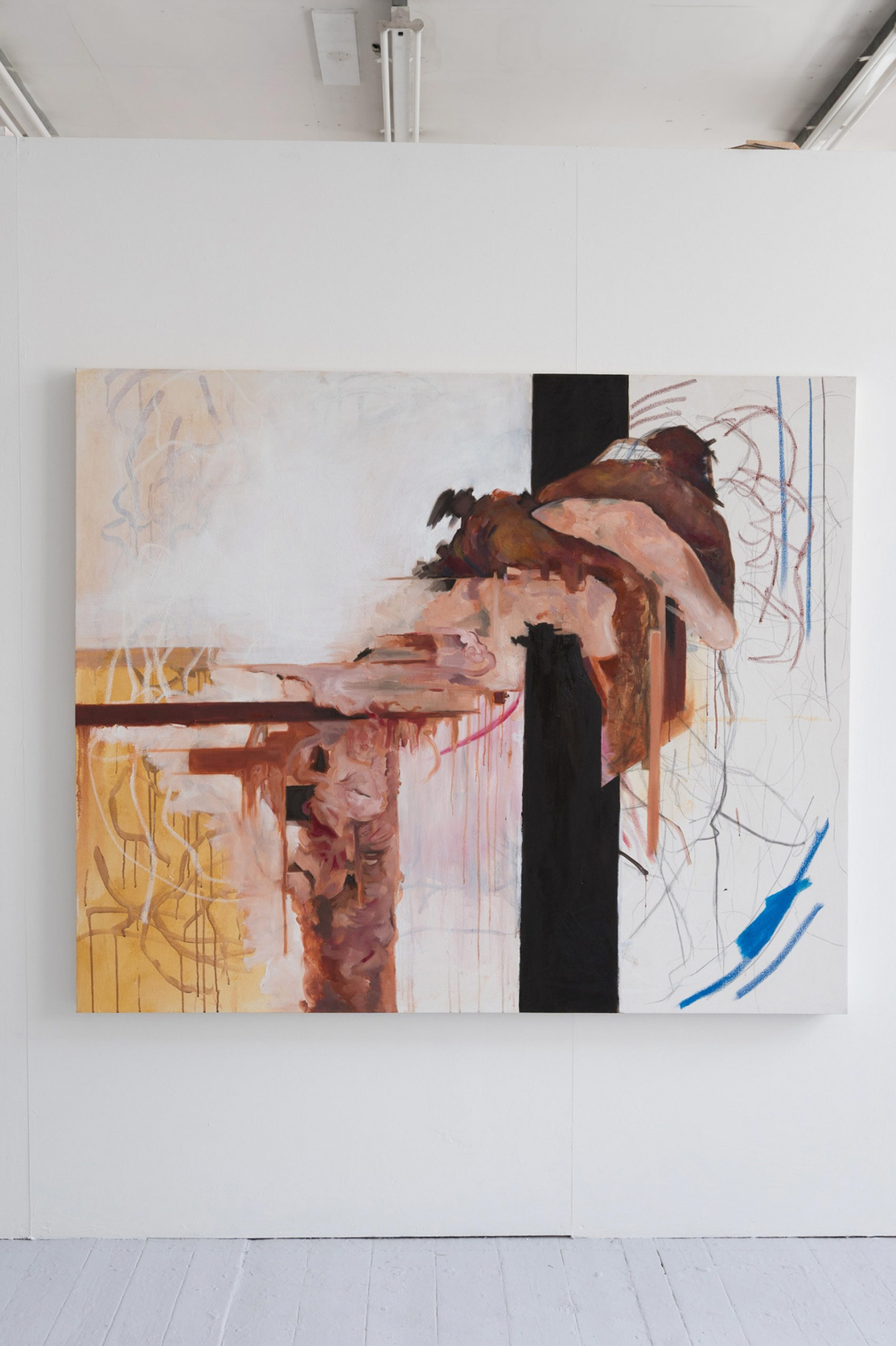
My practice is process led, starting with charcoal drawings of female figures and forms that overlap into illegibility and multiplicity. These figures are retold from women’s rugby photos, which allows for me to work from a more flesh-on-flesh dynamic. From this, I pull figures forward through oil paint, allowing them to affirm themselves visibly, whilst not allowing other figures to be visible at all.
By doing so, I reflect on ideas of womanhood as a collective experience in relation to unity, visibility, fragmentation and ephemerality. I incorporate mark-making as a vestige of the body, creating and responding to line, by tactile methods or otherwise. This aligns with my ideas on female identity and the range in which it can be manifested. Working through a lens of abstraction and representation, the enigmatic figures often integrate into each other, allowing for a fluid demonstration of womanhood and its transformation.
My research involves internalised misogyny and a borderspace that situates itself between co-emergence with the male gaze and the rejection of it. Doing both, or perhaps neither. I would describe my practice as a visualisation of the transformation of female identity within a patriarchal framework by both result and process, whilst underlining the complexity of such, as I have since realised the impossibility to fully transcend such ideologies.